
Suzuki Cello Book 5 is an intermediate-level guide in the Suzuki Method‚ offering advanced repertoire and techniques․ It includes pieces like Vivaldi’s sonatas and Danse Rustique‚ fostering musical growth․ PDFs are available but respect copyright laws․
Overview of the Suzuki Method
The Suzuki Method is an internationally renowned music education approach developed by Shinichi Suzuki․ It emphasizes the concept of “talent education‚” believing every child can learn music like their native language through immersion and nurturing․ The method focuses on creating a supportive environment‚ fostering discipline‚ and building character․ Key principles include listening to recordings‚ parental involvement‚ and gradual progression․ The Suzuki Cello Book 5 fits into this structured curriculum‚ offering intermediate pieces that refine technique and musicality․ The method’s “mother-tongue” philosophy ensures students develop a deep connection with music‚ guided by a teacher’s personalized instruction․ This approach has worldwide recognition for its effectiveness in cultivating skilled and passionate musicians․
Significance of Book 5 in the Suzuki Cello Curriculum
Suzuki Cello Book 5 holds a pivotal role in the curriculum‚ marking a transition to intermediate-level playing․ It introduces more complex techniques and repertoire‚ such as Vivaldi’s sonatas‚ fostering advanced musicality․ This book bridges foundational skills and higher-level challenges‚ refining tone‚ intonation‚ and finger dexterity․ Pieces like Danse Rustique and Vivaldi’s Allegro movement expand the student’s technical and expressive capabilities․ The curriculum emphasizes listening and teacher guidance‚ ensuring a smooth progression․ Book 5 is essential for building confidence and preparing students for more advanced repertoire‚ solidifying their understanding of music theory and performance practices․ It represents a milestone in the Suzuki Method‚ blending technical rigor with artistic expression to nurture well-rounded musicians․

Content of Suzuki Cello Book 5
Suzuki Cello Book 5 includes renowned repertoire like Vivaldi’s sonatas and Danse Rustique‚ introducing advanced techniques such as tenor clef and position shifts․ Copyright-protected‚ it requires an official purchase for performance use․
Repertoire and Pieces Included
Suzuki Cello Book 5 features a diverse and challenging repertoire‚ including works by Vivaldi‚ such as the Cello Sonata No․ 5 in E Minor and the Allegro from his E Minor Sonata․ These pieces introduce students to Baroque-style compositions‚ emphasizing phrasing and articulation․ Additionally‚ the book includes Danse Rustique by W․H․ Squire‚ which adds a touch of lyricism and technical demand․ The repertoire is carefully selected to bridge the gap between intermediate and advanced playing‚ fostering musicality and technical proficiency․ Each piece is designed to help students develop a stronger tone‚ improve intonation‚ and master more complex bowing techniques․ The inclusion of multiple movements allows for a comprehensive study of dynamics‚ rhythm‚ and expression․ This book is a cornerstone in the Suzuki Method‚ preparing students for the demands of advanced cello literature while maintaining a focus on musical expression․
Techniques Introduced in Book 5
Suzuki Cello Book 5 introduces several advanced techniques to refine students’ skills․ One key focus is shifting positions‚ particularly between lower and higher positions‚ to enhance accuracy and smooth transitions․ Vibrato is also explored in greater depth‚ teaching students to control and vary its width and intensity for expressive playing․ Double stops and chords are introduced‚ providing a foundation for more complex harmonies and polyphonic playing․ Additionally‚ the book emphasizes bow control techniques‚ such as spiccato and legato‚ to develop tonal variety and articulation․ Tenor clef reading is also introduced‚ preparing students for advanced repertoire․ These techniques collectively challenge students to improve their technical proficiency while maintaining musicality and expression․
Transition to More Advanced Playing
Suzuki Cello Book 5 serves as a bridge to more advanced playing by expanding technical and musical demands․ Pieces in this book are more complex‚ requiring students to demonstrate refined finger dexterity‚ bow control‚ and expressive nuances․ The repertoire introduces longer works‚ such as sonatas‚ which challenge students to sustain musical ideas over extended periods․ Additionally‚ the book begins to prepare students for the transition to tenor clef‚ a critical skill for advanced cello literature․ By mastering the techniques and musicality in Book 5‚ students build a strong foundation for tackling the more demanding repertoire in later books․ This transition fosters confidence and readiness for the challenges of advanced cello playing‚ ensuring a smooth progression in their musical journey․

Key Pieces in Suzuki Cello Book 5

Suzuki Cello Book 5 features iconic works like Vivaldi’s Cello Sonata No․ 5 in E Minor and W․H․ Squire’s Danse Rustique‚ challenging students technically and musically․

Vivaldi Cello Sonata No․ 5 in E Minor‚ Largo (Movement 3)
The Largo movement from Vivaldi’s Cello Sonata No․ 5 in E Minor is a cornerstone of Suzuki Cello Book 5‚ showcasing the composer’s mastery of expressive slow movements․ This piece‚ originally written for cello and continuo‚ highlights lyrical phrasing and rich tonal production․ Students are introduced to more complex fingerings and bowing techniques‚ requiring careful attention to intonation and dynamic control․ The E minor tonality provides a somber yet elegant framework for exploring deeper musicality․ This movement challenges players to maintain a steady tempo while conveying emotional depth‚ making it a pivotal piece in advancing technical and interpretive skills within the Suzuki curriculum․
Danse Rustique by W․H․ Squire
Danse Rustique‚ composed by W․H․ Squire‚ is a lively and charming piece featured in Suzuki Cello Book 5․ This work‚ with its folk-inspired rhythms and energetic character‚ provides a delightful contrast to the more solemn pieces in the book․ Students are introduced to a variety of articulations and dynamic contrasts‚ which enhance their technical and musical expression․ The piece demands precise finger dexterity and bow control‚ particularly in its brisk tempo and syncopated passages․ Danse Rustique is a popular choice for its engaging melody and rhythmic vitality‚ making it a rewarding challenge for advancing cellists․ It also serves as an excellent vehicle for developing a strong sense of timing and phrasing‚ aligning with the Suzuki method’s emphasis on musicality and technical refinement․
Vivaldi Cello Sonata in E Minor‚ Movement 2 Allegro
The Allegro movement from Vivaldi’s Cello Sonata in E Minor‚ featured in Suzuki Cello Book 5‚ is a vibrant and technically demanding piece․ This fast-paced Baroque work requires precise finger dexterity‚ accurate intonation‚ and strong bow control․ Students are challenged to maintain clarity and precision in the rapid passages while conveying the lively‚ energetic character of the music․ The Allegro contrasts beautifully with the slower Largo movement‚ showcasing the student’s ability to adapt to varying tempos and styles․ This piece reinforces essential Baroque performance practices‚ such as phrasing and dynamic contrasts‚ and is a cornerstone of the Book 5 repertoire‚ helping to advance technical proficiency and musical expression․ It is a thrilling piece that highlights the cellist’s growing mastery and artistry․
Practice Tips for Suzuki Cello Book 5
Practice slowly‚ focusing on intonation and tone․ Use a metronome to improve timing․ Listen to recordings to develop musicality․ Break pieces into sections for mastery․
Importance of Listening to Recordings
Listening to recordings of Suzuki Cello Book 5 is essential for developing a strong musical foundation․ It helps students internalize phrasing‚ tone‚ and rhythm․ Recordings provide a model for dynamics‚ articulation‚ and bowing techniques․ By frequently listening‚ students can mimic the nuances of professional performances‚ enhancing their own playing․ This practice fosters a musical ear and sets a high standard for interpretation․ Over time‚ it builds confidence and inspires students to strive for excellence in their cello practice․ Regular listening‚ especially in the early stages‚ is a cornerstone of the Suzuki Method and complements daily practice effectively․
Using a Metronome for Timing
Using a metronome is a vital practice tool for mastering the pieces in Suzuki Cello Book 5․ It helps students develop a strong sense of rhythm and timing‚ which are critical for accurate performance․ A metronome ensures that students play at the correct tempo‚ fostering consistency and precision․ By practicing with a metronome‚ students can improve their ability to maintain a steady pulse‚ especially in faster movements․ This tool is particularly useful for complex rhythms and time signature changes found in Book 5․ Starting with slower tempos and gradually increasing speed builds confidence and technical accuracy․ Regular use of a metronome strengthens overall musicianship and prepares students for more advanced repertoire․
Developing Tone and Intonation
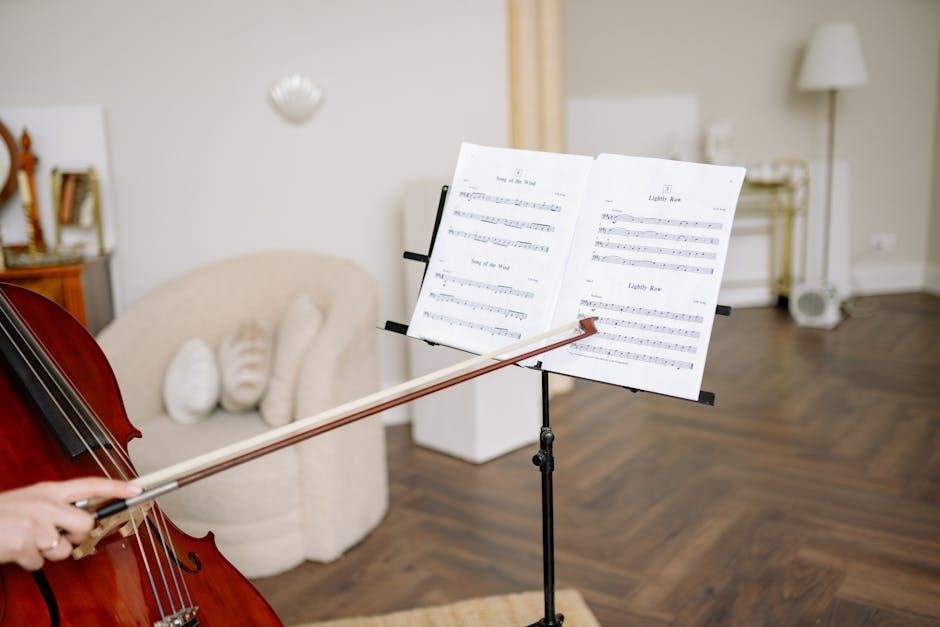
Developing tone and intonation is a critical focus in Suzuki Cello Book 5‚ as students transition to more advanced repertoire․ Achieving a rich‚ resonant tone requires careful attention to bow placement‚ pressure‚ and speed․ Practicing long tones and scales helps build consistency and quality of sound․ Intonation must be precise‚ especially in higher positions‚ where notes are closer together․ Using a tuner or piano for reference can aid in developing accurate pitch․ Vibrato control is also refined‚ enhancing expressiveness․ Students should focus on producing a warm‚ even sound across all strings and registers․ Regular practice of these techniques‚ guided by a teacher‚ ensures progress and prepares students for the musical demands of Book 5 and beyond․
Progression and Challenges
Mastering Suzuki Cello Book 5 presents progression with increased technical challenges‚ such as intricate bowing techniques and precise intonation‚ requiring consistent and dedicated practice for optimal performance․
Understanding Fingerings and Positions
Understanding fingerings and positions is critical in Suzuki Cello Book 5‚ as pieces require precise technical accuracy and fluidity․ Students must learn to navigate the fingerboard confidently‚ using fingerings tailored to each piece․ This includes mastering shifts‚ extensions‚ and alternate fingerings to achieve optimal tone and intonation․ Proper hand positioning and finger placement are emphasized to avoid strain and ensure technical ease․ The curriculum introduces more complex finger patterns‚ preparing students for advanced repertoire․ A private teacher plays a vital role in guiding fingerings and adjusting positions to suit individual hand shapes and technical needs․ Consistent practice and mindfulness of finger placement are essential for progress‚ ensuring students develop a strong foundation for future musical growth and technical mastery․
Mastering Tenor Clef
Mastering tenor clef is a significant milestone in Suzuki Cello Book 5‚ as it expands students’ reading skills and prepares them for more advanced repertoire․ The tenor clef‚ commonly used in higher-pitched cello music‚ requires a strong understanding of note placement and fingerboard geography․ Students must adapt to reading notes an octave lower than written‚ which can feel unfamiliar after relying on bass clef․ Pieces like Vivaldi’s Sonata in E Minor introduce tenor clef‚ blending technical challenge with musical expression․ Regular practice and sight-reading exercises help build confidence․ A private teacher can provide guidance on navigating tenor clef seamlessly‚ ensuring students develop fluency and accuracy․ This skill not only enhances their technical abilities but also broadens their musical versatility‚ making it an essential part of their progression in Book 5․
Role of a Private Teacher
A private teacher plays a pivotal role in guiding students through Suzuki Cello Book 5‚ offering personalized instruction and expertise․ They help refine complex techniques introduced in the book‚ such as tenor clef navigation and advanced fingerings․ A teacher provides tailored feedback on tone production‚ intonation‚ and musical expression‚ ensuring students meet the repertoire’s demands․ They also address individual challenges‚ like rhythm accuracy or bow control‚ and foster a deeper understanding of the music’s emotional depth․ Additionally‚ a private teacher can motivate students to practice consistently and explore supplementary materials‚ enhancing their overall progress․ Their insights and corrections are invaluable for mastering Book 5’s pieces and preparing for more advanced studies․

Additional Resources
Access Suzuki Cello Book 5 in PDF format through authorized publishers or online retailers․ Supplementary materials include sheet music‚ practice guides‚ and online forums for support and advice․

PDF Availability and Copyright Considerations
The Suzuki Cello Book 5 is widely available in PDF format‚ but it’s crucial to obtain it from authorized sources to respect copyright laws․ The International Suzuki Association holds the copyright‚ and unauthorized distribution is prohibited․ Purchasing the PDF from reputable publishers ensures legality and supports the creators․ Many online retailers offer digital versions‚ but verify their authenticity to avoid infringing on copyright․ Additionally‚ some educational institutions may provide access through subscriptions․ Always prioritize legal sources to maintain the integrity of the Suzuki method and its legacy․ Using copyrighted materials responsibly fosters respect for the artistic and educational community․ Supplementary PDF materials‚ like practice guides‚ are also available legally‚ offering further support for students․

Recommended Supplementary Materials

Supplementary materials can enhance the learning experience for Suzuki Cello Book 5․ Technique books like Popper’s Etudes or Piatti’s Caprices are excellent for refining finger dexterity and intonation․ Method books such as Galamian’s or Flesch’s can provide additional exercises tailored to advanced techniques․ Orchestra excerpts‚ such as those from Haydn or Brahms‚ offer exposure to ensemble playing and musicality․ Listening to recordings of professional cellists‚ like Yo-Yo Ma or Jacqueline du Pré‚ is highly recommended for inspiration and tone development․ Online platforms and communities‚ such as Facebook groups or forums like CelloBello‚ can connect students with teachers and peers worldwide․ These resources complement the Suzuki method‚ fostering well-rounded musical growth and technical mastery․ Exploring these materials under a teacher’s guidance ensures a comprehensive learning journey․
Online Communities and Forums
Engaging with online communities and forums can provide valuable support for studying Suzuki Cello Book 5․ Platforms like CelloBello and Reddit’s r/cello offer spaces to connect with fellow cellists‚ share insights‚ and receive feedback․ These communities often feature discussions on techniques‚ interpretations‚ and performance tips specific to Suzuki repertoire․ Additionally‚ forums like the Suzuki Association of the Americas (SAA) provide resources and updates for both students and teachers․ Many websites host video tutorials and masterclasses‚ offering supplementary guidance for complex pieces․ Online groups also enable collaboration and motivation through shared goals and progress tracking․ Participating in these forums fosters a sense of belonging and encourages continuous improvement‚ making them an invaluable resource for advancing cellists․
Mastering Suzuki Cello Book 5 is a significant milestone‚ preparing students for advanced repertoire while fostering musicality and technical precision․ It represents a crucial step in a cellist’s journey‚ rewarding dedication with profound musical growth and readiness for higher-level challenges․
Final Thoughts on Suzuki Cello Book 5
Suzuki Cello Book 5 marks a pivotal stage in a cellist’s development‚ bridging foundational skills with advanced techniques․ The repertoire introduces students to Baroque and Romantic styles‚ enhancing musicality and technical prowess․ PDF versions of Book 5 offer convenience for practice and study‚ though they should be used responsibly‚ respecting copyright laws․ The book’s pieces‚ such as Vivaldi’s sonatas and Squire’s Danse Rustique‚ challenge students to refine tone‚ intonation‚ and articulation․ Mastery of Book 5 prepares cellists for more complex works‚ solidifying their readiness for advanced repertoire․ Consistent practice‚ guided by a qualified teacher‚ is essential to unlock the full potential of this volume․ It is a testament to the Suzuki Method’s effectiveness in nurturing skilled‚ expressive musicians․